
Residential vs. Commercial Chain Link Fencing: Understanding Wire Gauge, Post Sizes, and Strength
July 1, 2026
July 1, 2026
Residential vs. Commercial Chain Link Fencing: Understanding Wire Gauge, Post Sizes, and Strength
Residential vs. Commercial Chain Link Fencing: Understanding Wire Gauge, Post Sizes, and Strength
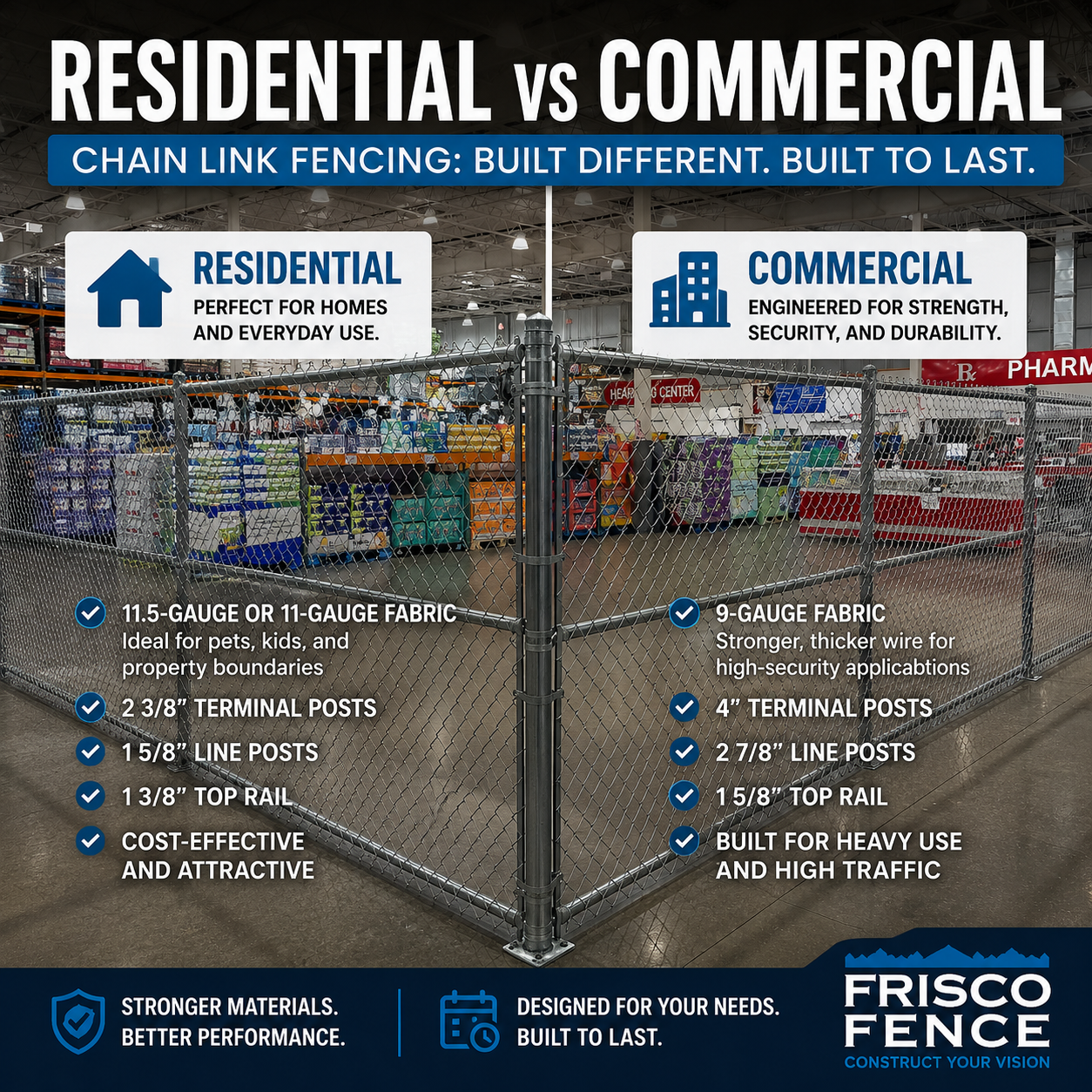
The biggest differences come down to the wire gauge of the chain link fabric , the diameter and wall thickness of the steel posts , and the hardware used to hold everything together .
Understanding these differences can help you choose the right fence for your property.
Residential Chain Link Fencing
Common applications include:
- Backyards
- Dog runs
- Side yards
- Garden enclosures
- Property boundaries
- Pool fencing (where code permits)
Most residential chain link fences use 11.5-gauge or 11-gauge fabric . This wire provides excellent durability for containing pets and children while remaining an affordable option for homeowners.
Residential fences are typically supported by:
- 2 3/8-inch terminal posts (corner, end, and gate posts)
- 1 5/8-inch line posts
- 1 3/8-inch top rail
These pipe sizes provide plenty of strength for normal residential applications while keeping the fence economical.
Commercial Chain Link Fencing
These fences are commonly installed around:
- Warehouses
- Schools
- Parks
- Office buildings
- Storage facilities
- Manufacturing plants
- Sports complexes
- Utility sites
- Construction yards
Commercial chain link often uses 9-gauge fabric , which is substantially thicker and stronger than residential wire.
That heavier wire offers several advantages:
- Greater resistance to impacts
- Increased resistance to cutting
- Better performance in high-traffic areas
- Longer service life in demanding environments
Commercial fencing also utilizes significantly heavier structural components.
Depending on the application, posts may include:
- 2 7/8-inch line posts
- 4-inch terminal posts
- Larger pipe sizes for high-security or industrial installations
These larger steel posts provide additional strength for taller fences, wider gate openings, and increased wind loads.
Why Wire Gauge Matters
In reality, the lower the gauge number, the thicker the wire .
For example:
- 11.5-gauge is the standard for many residential fences.
- 11-gauge offers a slight increase in strength.
- 9-gauge is significantly thicker and is commonly used on commercial projects.
That extra thickness makes a noticeable difference in the fence's ability to withstand abuse and provide long-term security.
It's Not Just About the Fabric
A fence is only as strong as the posts supporting it.
Using larger-diameter galvanized steel posts with heavier wall thickness helps prevent movement, reduces flexing, and provides better long-term stability.
Combined with quality fittings, proper concrete footings, and professional installation, a heavier framework can dramatically extend the life of a chain link fence.
Choosing the Right Fence
If your property experiences heavy traffic, requires enhanced security, or needs to protect equipment, vehicles, or inventory, commercial-grade chain link is the better investment.
Installing the proper wire gauge and post size from the beginning helps ensure your fence performs as intended for many years.
Chain Link Solutions Built to Last
Whether you need a backyard fence, a secure enclosure for your business, a sports facility, or a large industrial security fence, we'll recommend the appropriate fabric gauge, post sizes, and hardware for your specific application. Every fence we install is designed with durability, safety, and long-term performance in mind, so you can have confidence your investment will stand the test of time.
September 9, 2026
This is a subtitle for your new post
August 31, 2026
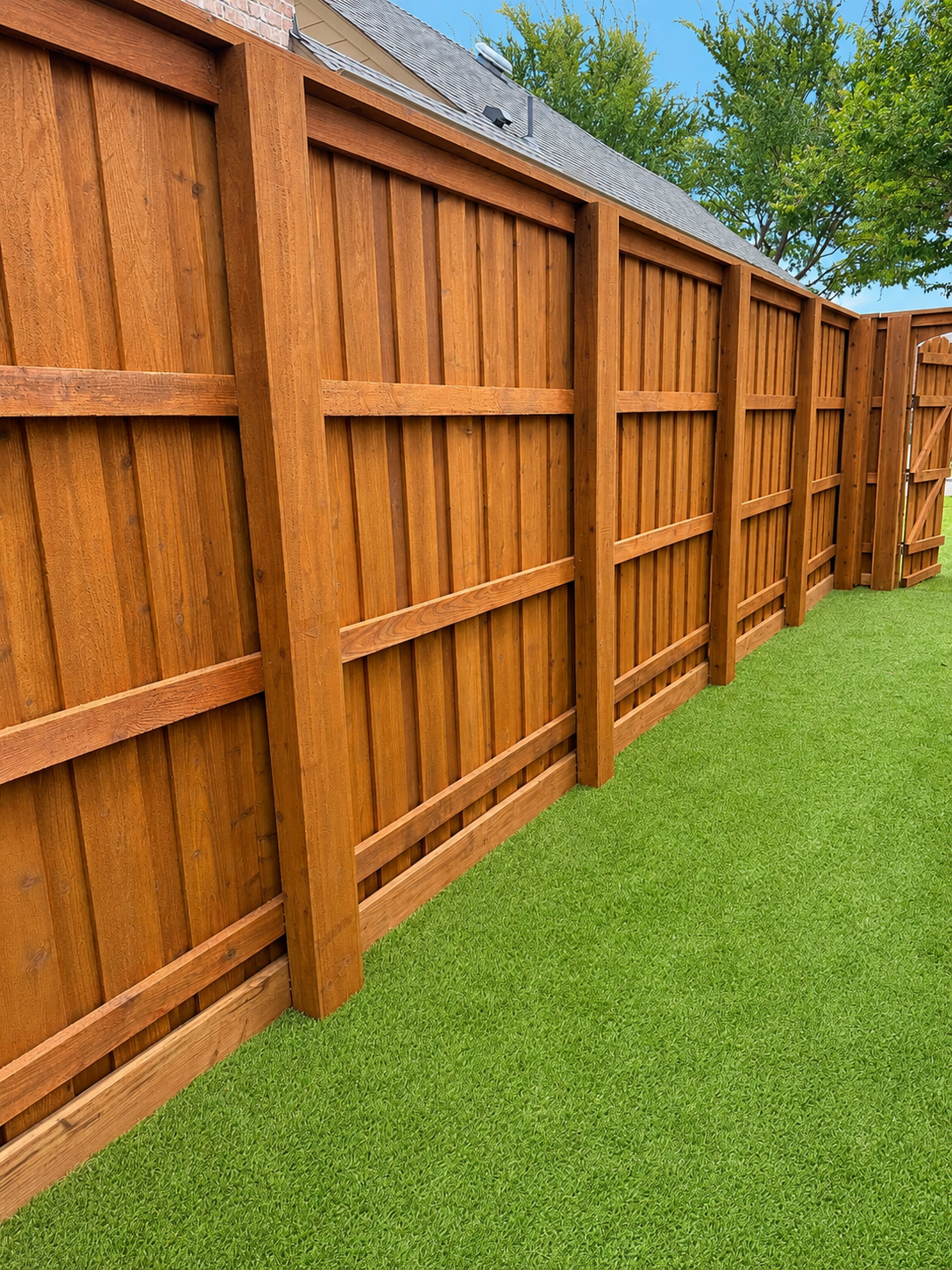
8 Foot Pre-Stained Japanese Cedar Board on Board Fence Replacement – Frisco, TX
August 27, 2026
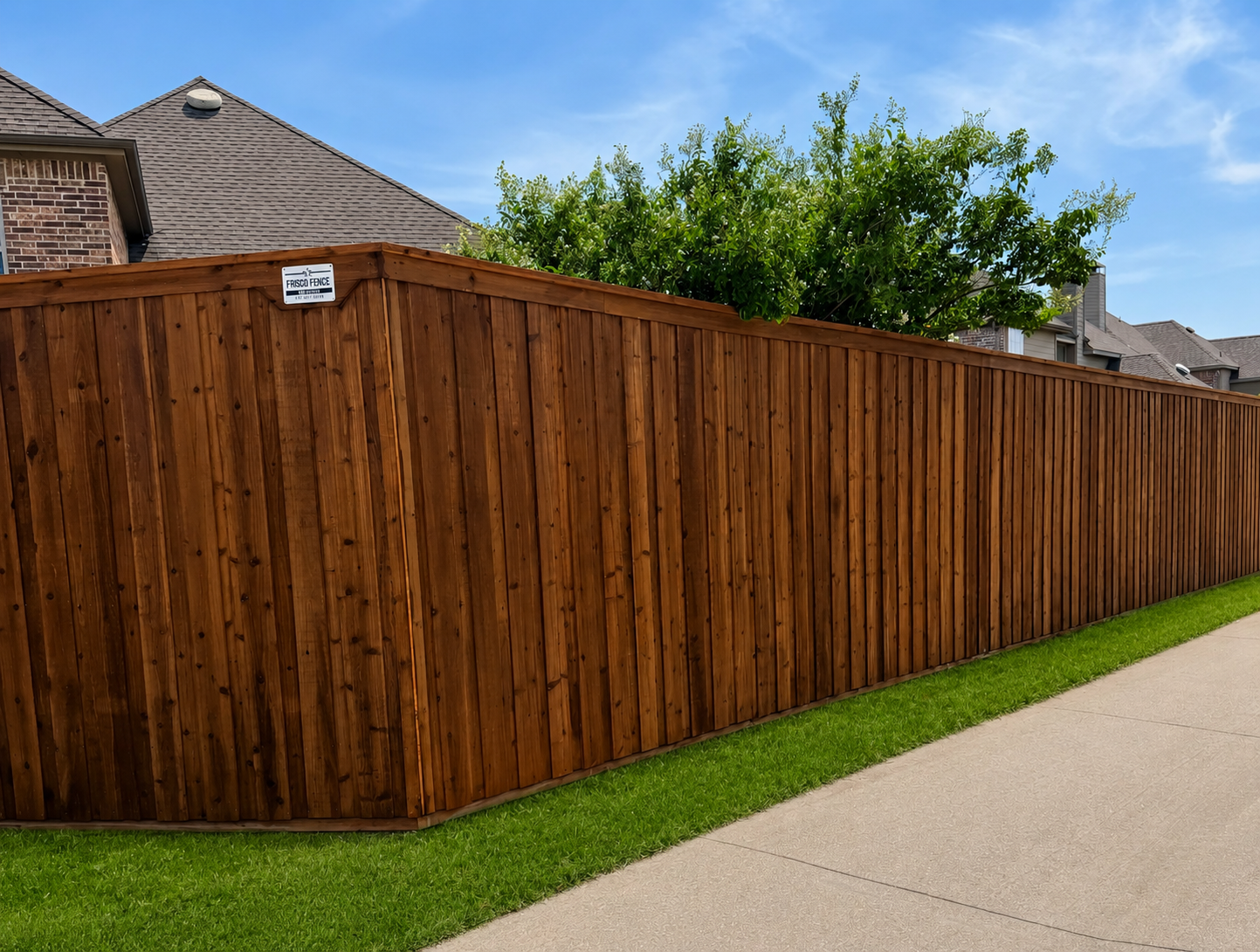
Beautiful 8-Foot Japanese Cedar Fence Replacement in Frisco, TX